Substrate assessment
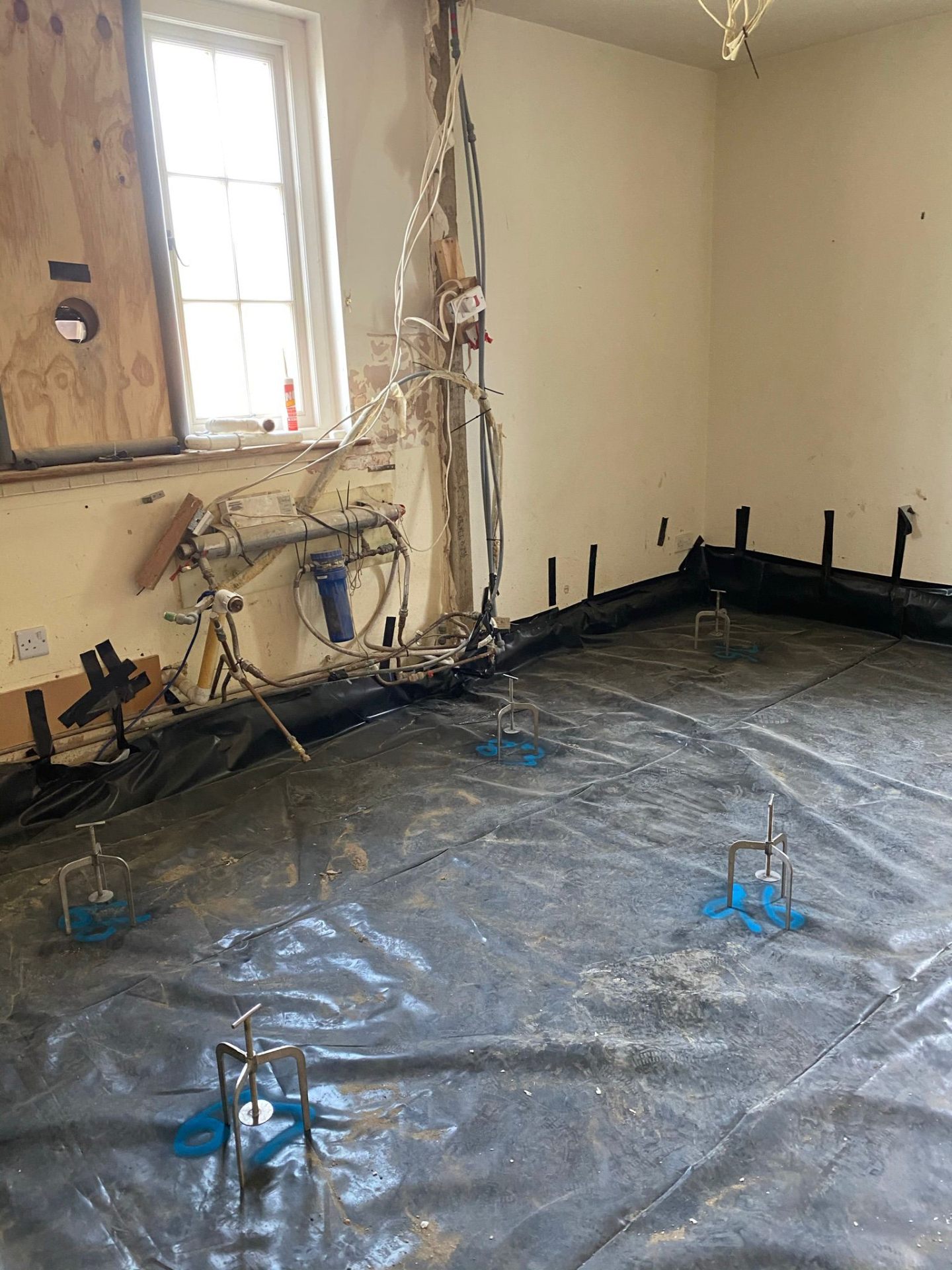
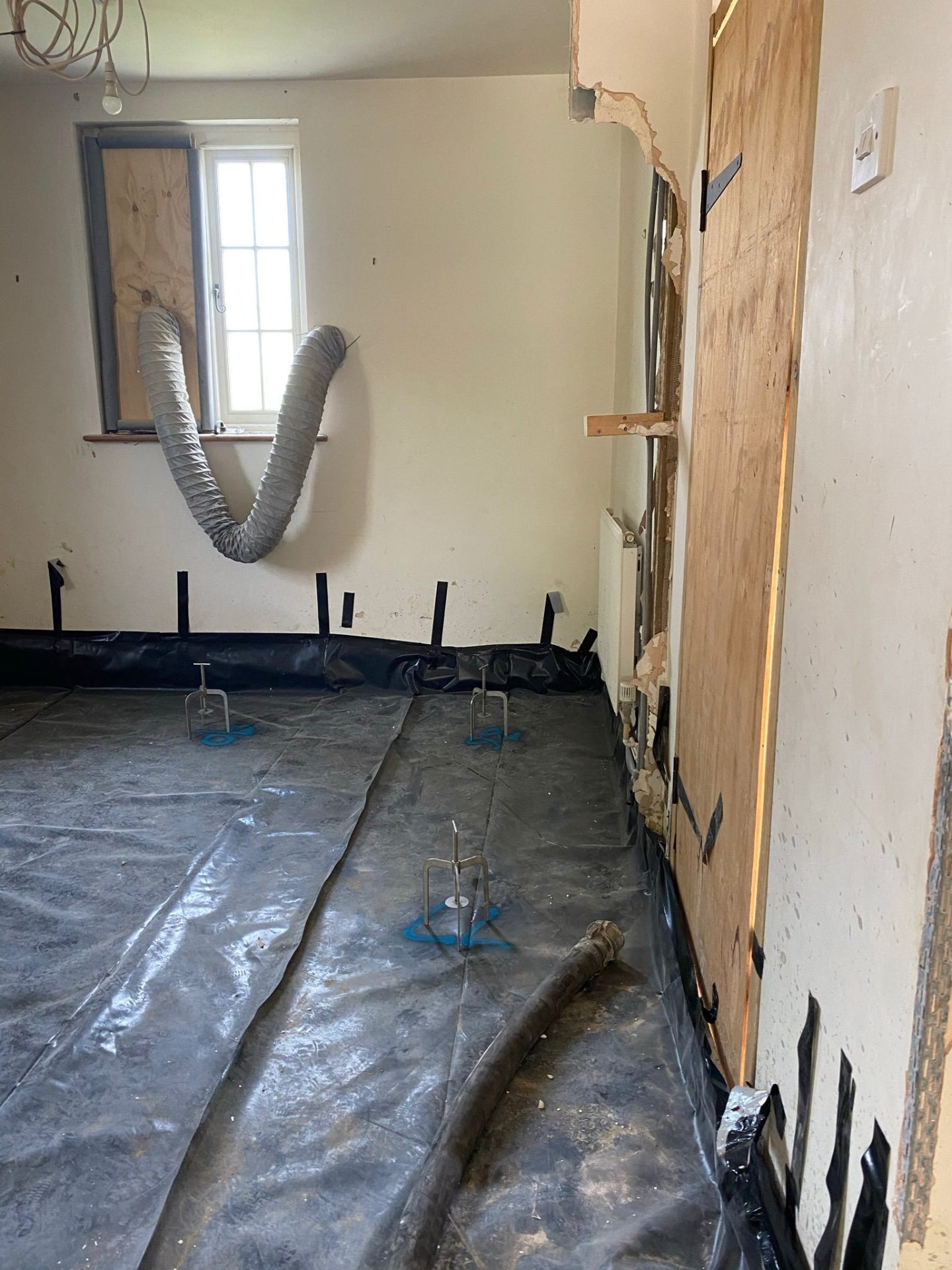
Every prep starts with assessing what's underneath. New-build slab: check levels, datum, surface contamination. Beam-and-block: check infill condition, level variance. Refurbishment: lift sample area, check existing floor build-up, check for asbestos, check for damp. We do this before any material is ordered.
Damp-proof membrane (DPM)
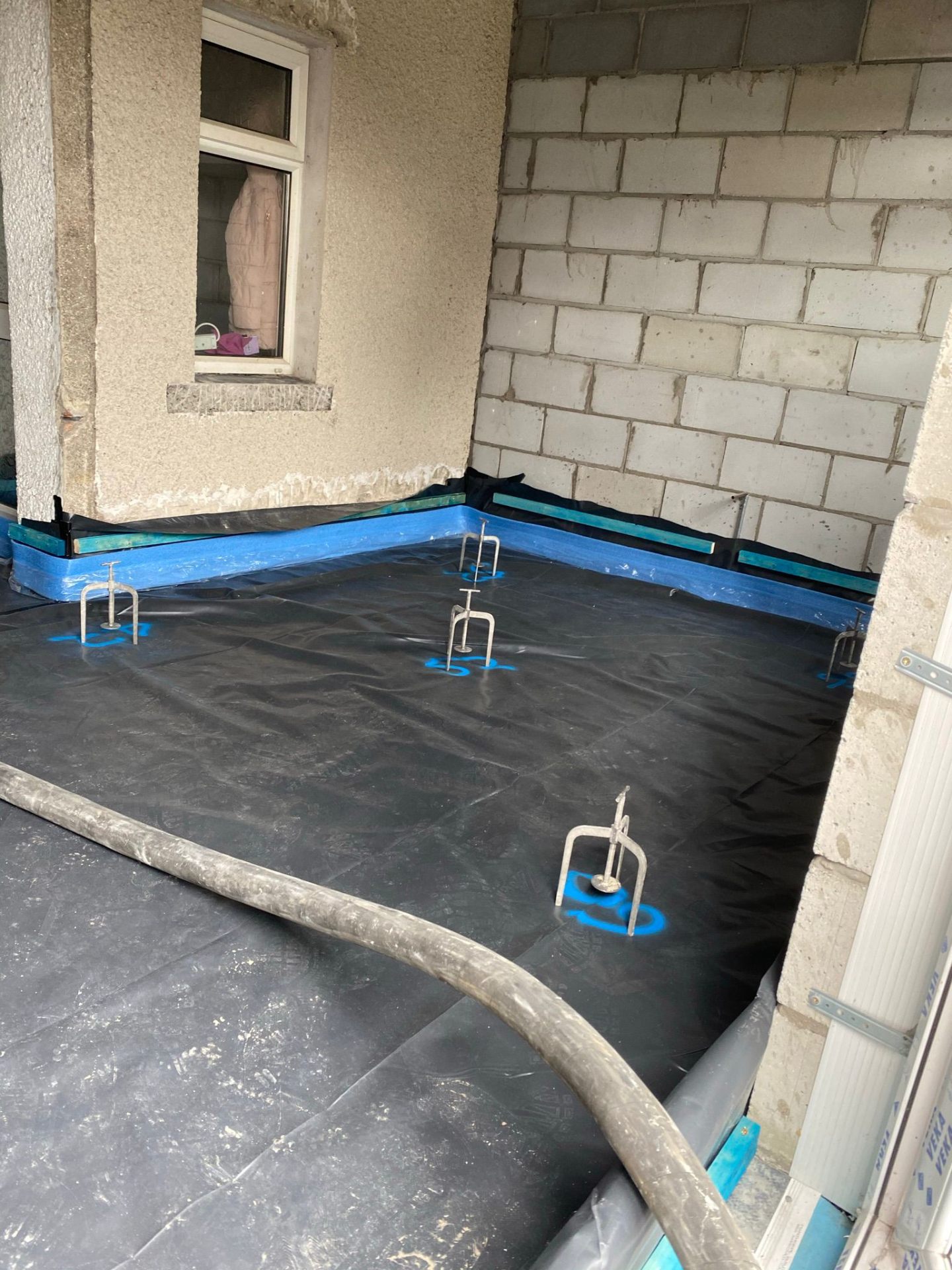
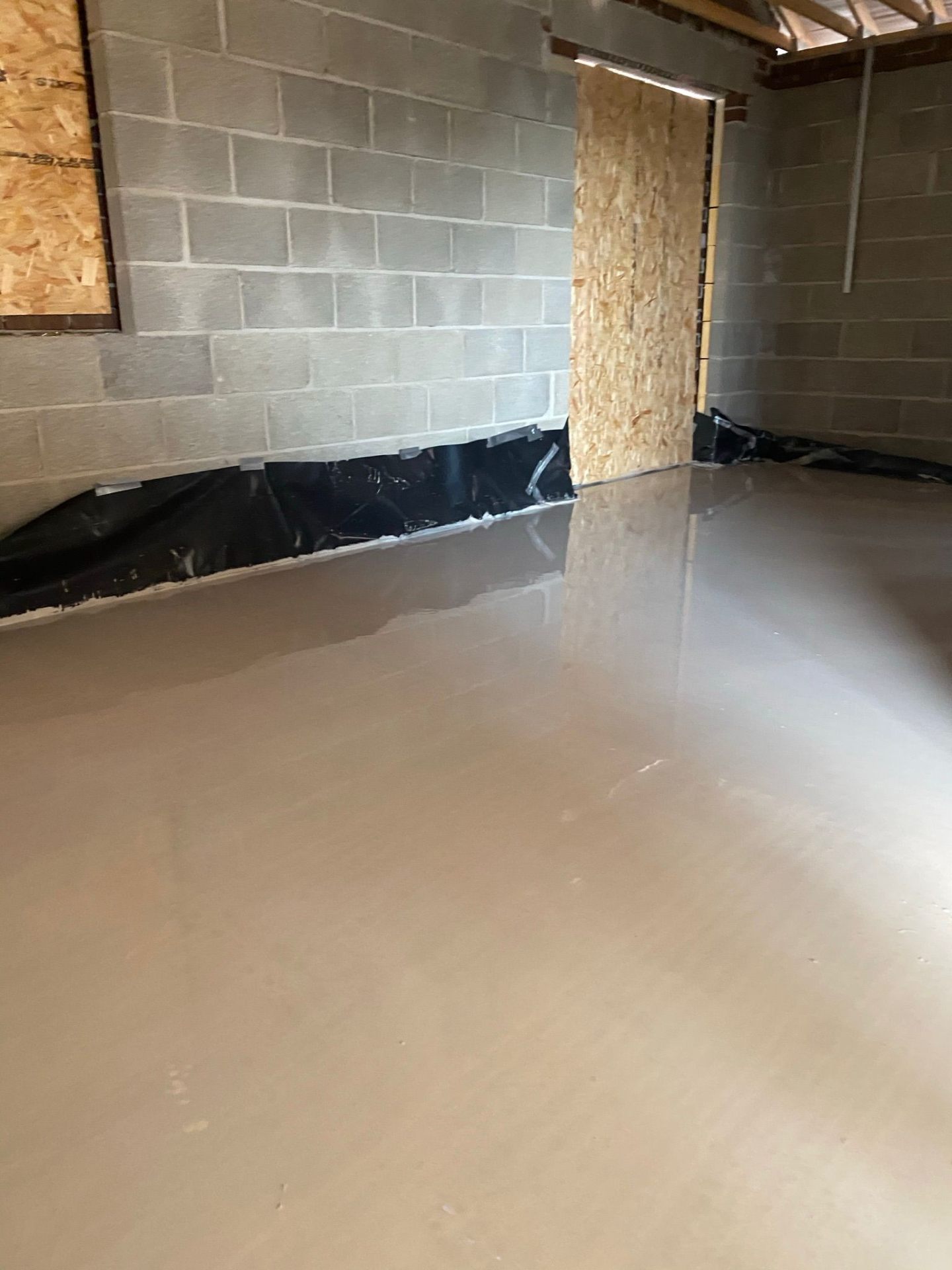
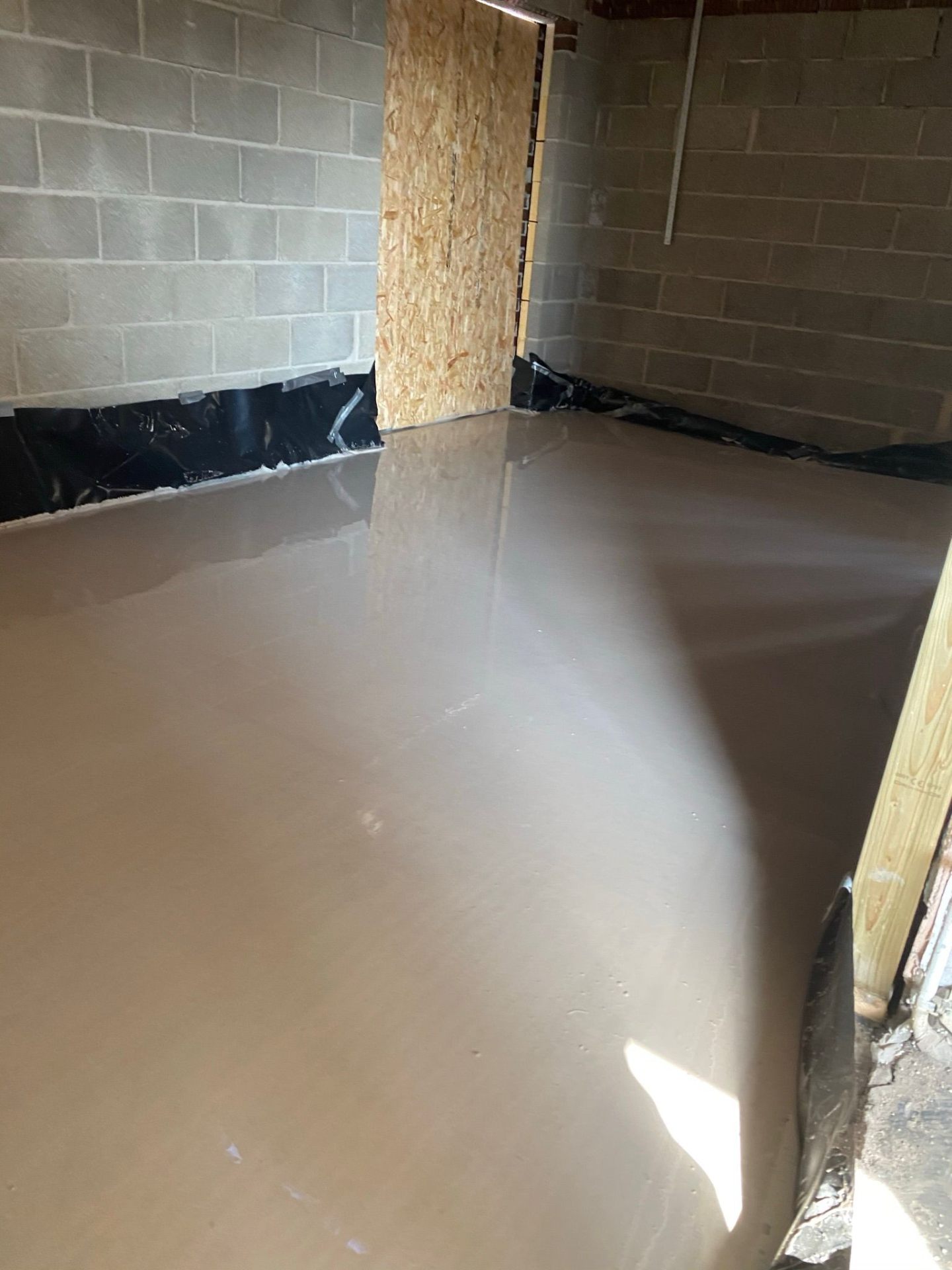
Polythene DPM (1000g or 1200g) laid in continuous sheets with 150mm taped laps and turn-up at perimeter. Penetrations (pipes, columns) detailed and taped. For damp substrates or particularly aggressive moisture conditions we specify liquid-applied DPM. Done once, done right, never visible again, but the entire floor depends on it.
Insulation: type, depth and grade
PIR boards (Celotex, Kingspan, Recticel) at 100–150mm typical for new-build floors. EPS for budget projects. XPS for high-load commercial. Cuts butted tight, joints taped, perimeter edge insulation 8–10mm to allow screed movement. We supply and lay all of it as part of the prep package.
Underfloor heating pipework set-out
We work to the UFH designer's layout, typical 150–200mm pipe centres for domestic, varied for room loads. Pipework clipped to the insulation at correct intervals, restrained at penetrations, and pressure-tested to the manufacturer's spec before pour. We hold pressure during the pour so any leak shows immediately, not under a finished floor.
Edge insulation and movement joints
8–10mm flexible edge insulation around every perimeter wall, every column, every doorway threshold. Movement joints designed into large pours and at changes of geometry. This is the detail that prevents cracking and curling, and the detail most often skipped on price-driven prep quotes.