Dappling calcium sulphate screed
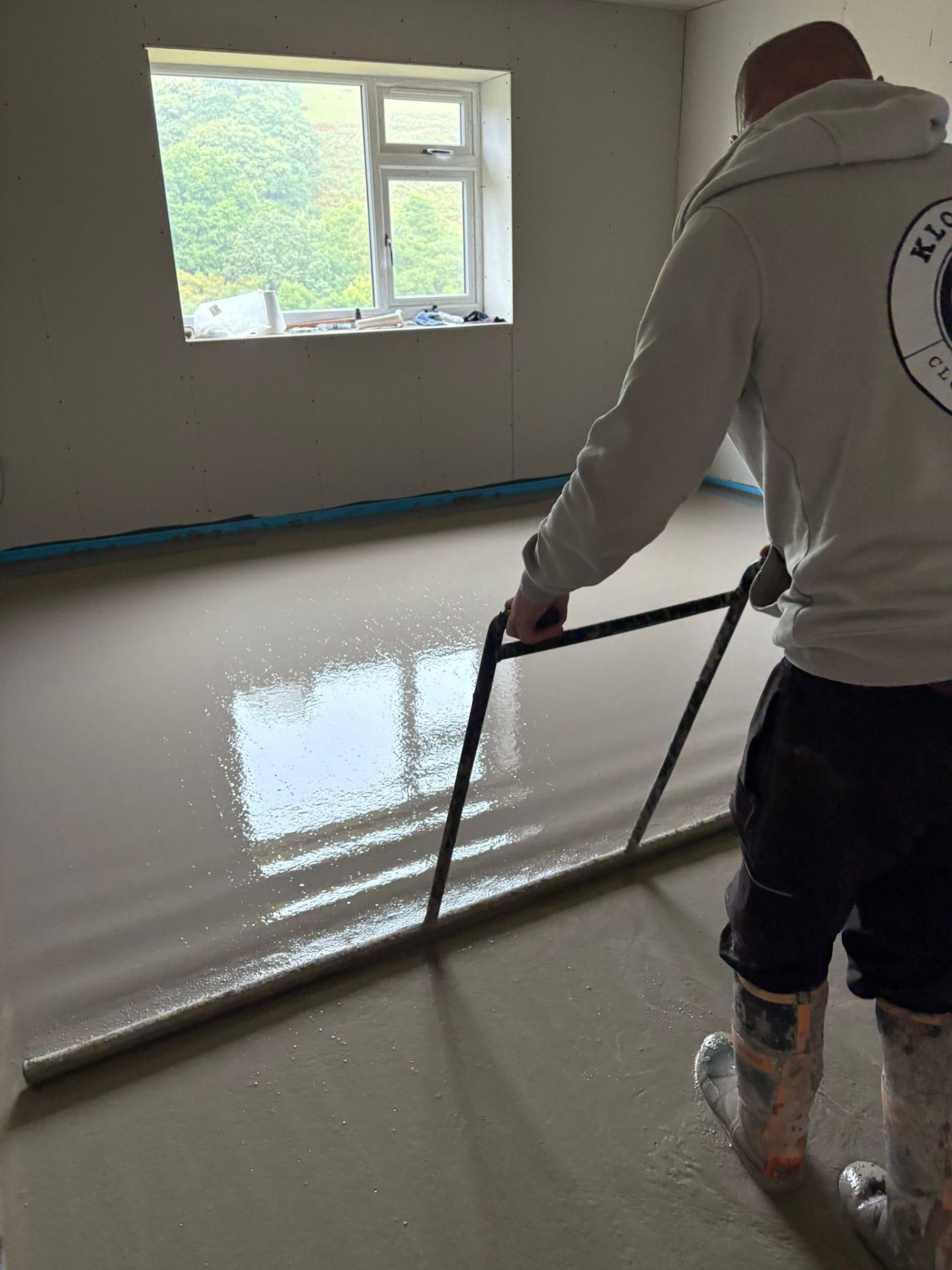
Calcium sulphate (anhydrite) screed develops a thin layer of laitance, a weak film of cement paste, within hours of pour. This must be removed mechanically before any adhesive-based finish can bond. We dapple with mechanical sanding equipment at 5–7 days post-pour, removing the laitance to expose sound screed beneath.
Surface preparation for tile and adhesive bond
Tile and stone fix to screed via cementitious or polymer adhesives. Both require a sound, clean, primed substrate. After dappling we vacuum, prime, and confirm bond before handover. For tile, we typically apply a polymer primer that the tile installer specifies.
Hygrometer moisture testing to BS 8203
Insulated hygrometer (Tramex or equivalent) sealed to the screed surface for minimum 72 hours. Reading taken at 21–28 days post-pour for calcium sulphate, 14–21 for cementitious. Target threshold typically <75% RH for most floor finishes, manufacturer-specific thresholds confirmed before testing.
Floor finish-specific preparation
Vinyl/LVT: smooth dappled finish, moisture test, primed for adhesive. Tile: dappled, primed for cementitious adhesive. Engineered timber: moisture test critical, floating system over DPM membrane. Polished concrete/resin: minimal dappling, full mechanical surface preparation, often diamond grinding.
Handover documentation
Every finishing job ends with a documented handover: moisture test readings, photograph of test points, dappling completion certificate, surface preparation record, and sign-off. Emailed to the main contractor and the floor finish installer.